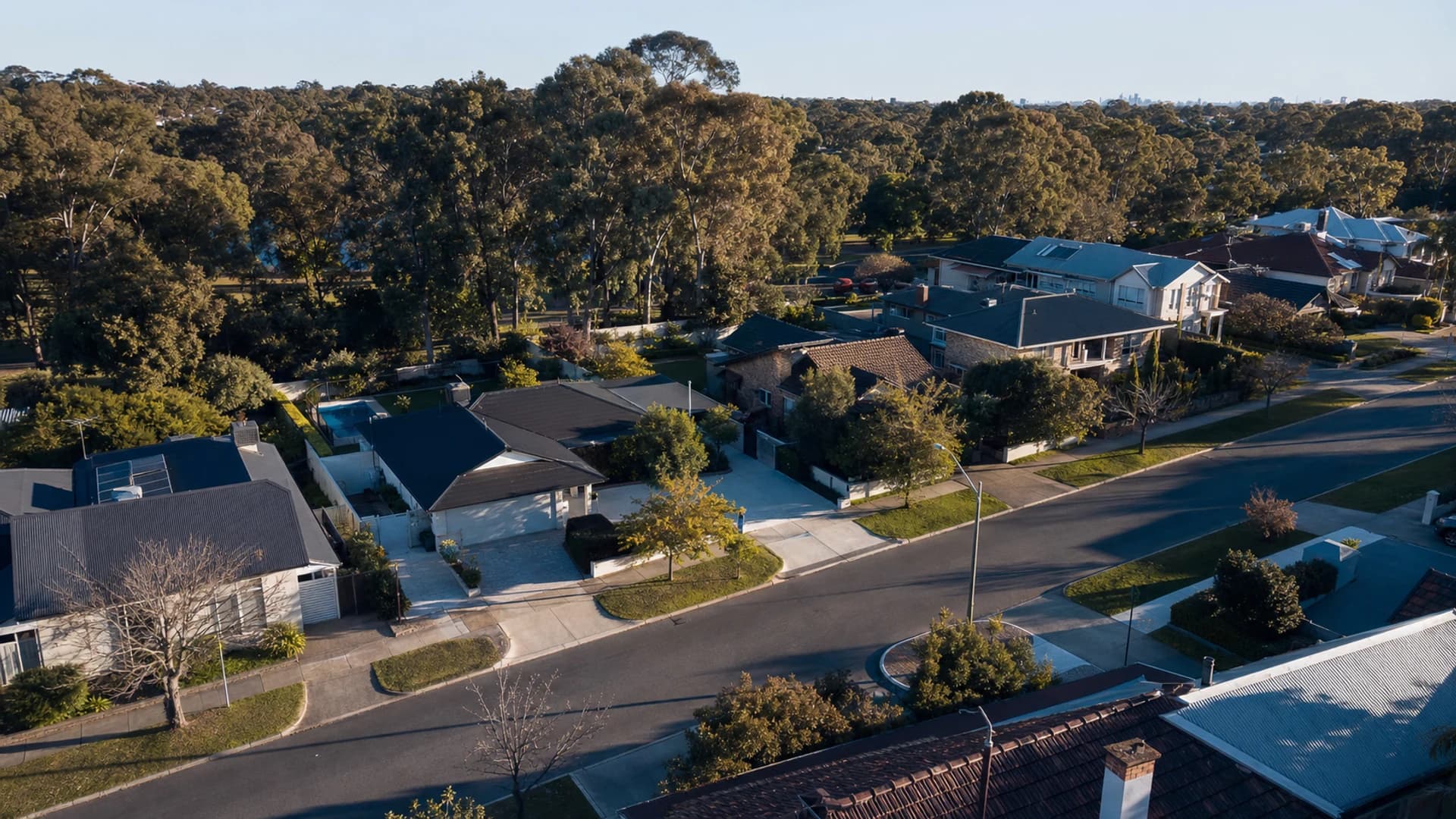
Most seller ads ask for too much, too soon. “What is your home worth?” sounds useful, but it also signals an appraisal call. An owner at the beginning of the decision may not be ready for that conversation. They may be ready to see what comparable homes nearby have sold for.
of sellers look at sold-property listings to help them find an agent.
External benchmark · realestate.com.au seller-leads guidance, accessed July 2026Source: realestate.com.au seller-leads guidanceA focused sold-price list meets that behaviour with a clear offer instead of a generic promise about service. The list is the offer. The ad only introduces it.
Turn quiet research into a useful conversation.
This is an early-intent campaign. Its job is to identify owners who care enough about comparable sales to ask for the detail, not to manufacture an immediate listing.
Four checks before you spend a dollar.
Specificity is the qualification mechanism. If the right owner cannot recognise themselves in the offer, the campaign is too broad.
 Build the evidence before the ad
Localise
Pick one suburb, or two adjoining suburbs when sales volume is thin.
Good: Recent sales in ScarboroughIsolate
Choose one property characteristic an owner can recognise instantly.
Good: Villas in YokineSource
Use current, disclosed results and media you are licensed to republish.
Good: Date, price, address, approved photoTie to follow-up
Connect delivery, consent, lead ownership and the next useful message.
Good: Immediate delivery, named owner, clear opt-out1. Pick the patch you want to win
Start with the suburb where you want more listings, not simply the area with the largest number of transactions.
One suburb is usually enough. If it has too few disclosed sales, extend the reporting period before expanding the geography. Six months of coherent local results is a clearer offer than three months of scattered sales across five suburbs.
2. Build a list worth requesting
The lead magnet has to keep the promise made by the ad. Include the address, disclosed sale price, sale date, a factual property description, a permitted image and the date the list was last updated.
The source check
- Use agency records or an authorised data provider.
- Confirm the terms allow republication.
- Leave withheld prices out.
- Use images the agency owns or is licensed to use.
Do not assume that because a result or image is visible on a property portal, it is free to copy into your page or advertising.
Build one campaign you can read clearly.
- Objective
- Leads
- Special Ad Category
- Housing, when applicable
- Conversion location
- Instant form
- Placements
- Advantage+ unless evidence says otherwise
- Schedule
- 14 days with a named review date
A$25–A$30 a day across a 14-day test. This is a planning range, not a universal benchmark.
Use a lifetime budget if you need a hard campaign cap. With a daily budget, Meta describes the amount as an average and may spend more on an individual day while balancing spend across the week.
Explain the list before you explain yourself.
Use a local home that matches the property type. Keep the visual ordinary and recognisable. This is market evidence, not a trophy-home advertisement.
See the latest disclosed sale prices for single-storey homes in [Suburb]. The list covers the past [period], includes photos and sale dates, and is updated [frequency].
Avoid presenting the list as a valuation. Comparable sales provide market context; they do not establish what a specific property will sell for.
Keep the promise before starting the pitch.
The thank-you screen and first email should link directly to the list. Delivering the requested resource is one action. Adding someone to ongoing marketing is another.
Deliver the list
Put the resource on the thank-you screen and in the first email.
Offer context
Ask whether they want help identifying the closest comparable sales.
Add one local observation
Share something useful, not a disguised appraisal demand.
Send only with consent
Identify the sender and include a working opt-out.
Measure the path, not just the form submit.
Bring the ad, form, approval and lead path together.
You still own the data source and permission to use it. Blockwise helps turn the offer into on-brand creative, prepare the campaign and form, show publishing readiness and bring incoming Meta leads into one review path.
The practical details.
Is a sold-price list the same as a property valuation?
No. It shows disclosed results for a defined group of properties. It gives an owner local market evidence, but it does not account for every feature or factor affecting their home.
Should the ad show the sold prices?
It can show a verified example if you have the right to use it, but the ad does not need to reveal the full list. Make clear that the requested resource contains the disclosed results.
Should I use an instant form or a website form?
An instant form is a sensible first test for a fast mobile submission. A website form may suit a flow that needs more explanation or an on-site action.
How often should I update the list?
Choose a frequency you can maintain. Monthly can suit an active suburb, while a slower market may need a longer interval. Always show the last-updated date.