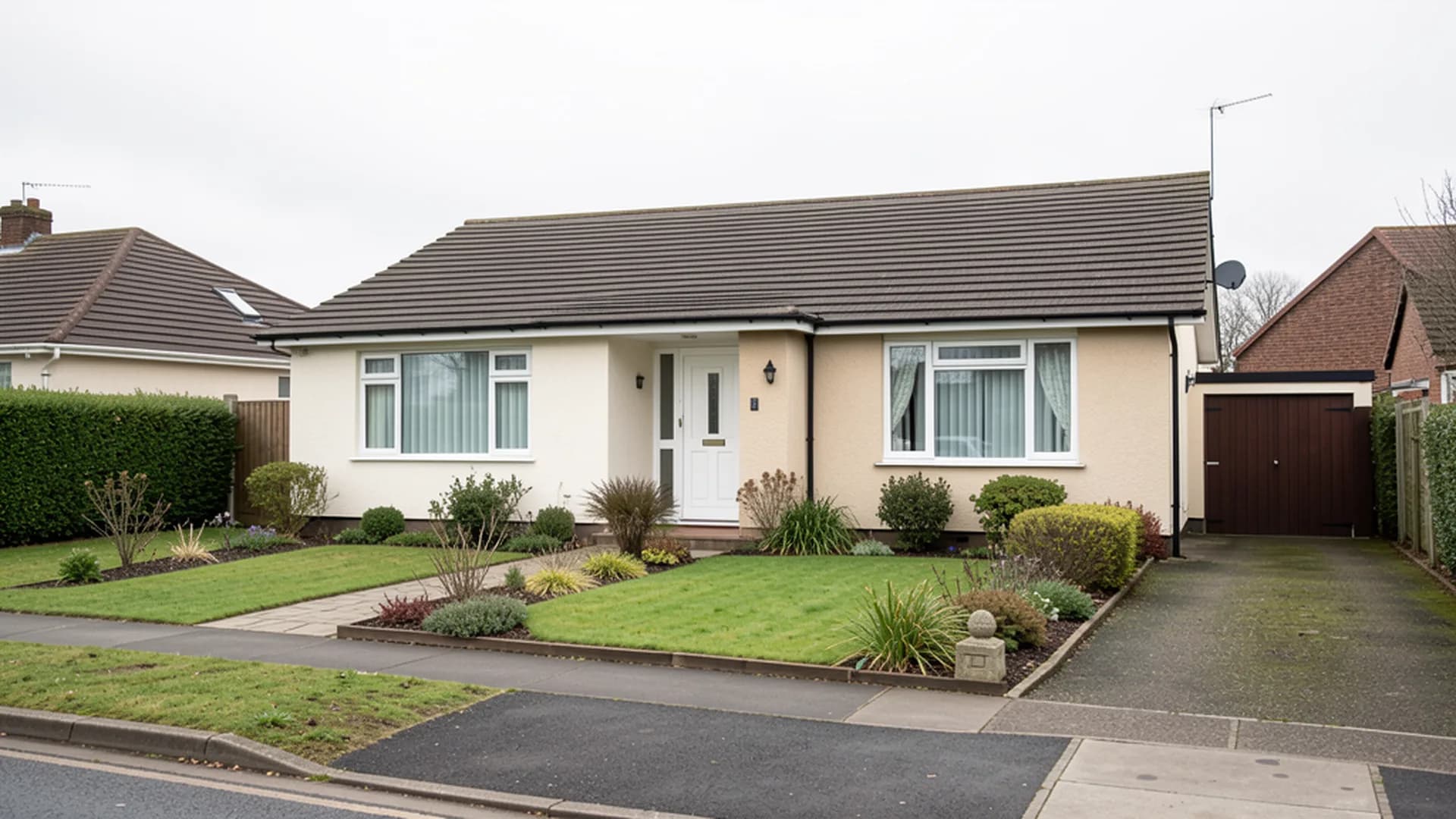
Seller-lead campaigns are the most expensive and most difficult ads in real estate. They ask directly: "Thinking of selling? Get a free home evaluation." That offer attracts two groups — people who are ready to list now (rare) and people who are curious but months away (common). The cost per lead is high because the offer signals a commitment most homeowners are not ready to make.
A downsizer campaign is framed as a buyer campaign. It offers a list of low-maintenance homes priced below the local average — the kind of property a downsizer would move to. But the audience it attracts has a second characteristic: these people already own a more expensive home. To buy a cheaper one, they generally need to sell first.
That means a buyer lead from a downsizing ad may also represent a sale opportunity — a listing on the more expensive property and a purchase on the cheaper one. The cost per lead is comparable to a standard buyer campaign, but the downstream opportunity may include both a purchase and a sale.
Downsizer campaigns need a price gap.
If your market has no meaningful price gap between the average home and the next step down, the angle will not produce seller leads — there is no financial reason to downsize.
Five conditions for a profitable downsizer campaign.
If three or more conditions are green, a downsizer campaign will likely produce a mix of buyer and seller leads. If two or fewer are green, choose a different angle.
Price gap
Is there a meaningful difference between the average home and the downsizer target?
Green: Average A$700K, target A$500K–A$650KHousing stock
Does your market have the property type downsizers want?
Green: Single-storey, low-maintenance villasIntent signal
Are people searching for or enquiring about smaller homes?
Green: Increasing searches for "single-storey"Feature recognition
Can you name the downsizer property type in one phrase?
Green: "Single-storey homes under A$500K"Market timing
Are market conditions pushing people toward downsizing?
Green: Rising rates, ageing demographic, cost pressureA buyer ad that quietly attracts sellers.
- Objective
- Leads
- Special Ad Category
- Housing
- Conversion location
- Instant forms
- Budget
- A$20/day
- Location
- Market centre, minimum radius per the housing special ad category
- Price band
- Average + 10% ceiling, A$150K below floor
- Feature
- Single-storey, low-maintenance
Stop scrolling. The most up-to-date list of single-storey homes under [A$price] in [Suburb] is here — updated daily, direct from an authorised property feed. Perfect for downsizers, first-home buyers and investors.
The word "downsizers" appears in the copy alongside "first-home buyers" and "investors." The ad does not single out downsizers or ask them to identify as sellers. It offers a list and lets the audience self-select.
The call that finds the seller.
Your first call is a buyer conversation, not a listing pitch. The goal is to understand their situation through four questions:
Already looking or browsing?
Tells you how warm the lead is.
Do you currently own a home?
This is the key question. If yes, the next question follows naturally.
Would you need to sell before buying?
Most downsizers will say yes. That is your seller lead.
What is your timeline?
A shorter planning range means a warmer lead. A longer range means nurture or long-term pipeline.
When they confirm they need to sell, shift the conversation:
That is very common for people looking at these homes. If it would help, I can take a look at your current property and give you a sense of what it is likely to sell for — no obligation, just so you know your numbers before you make a move.
Measure on a 90-day horizon, not 14 days.
Instead of relying on fixed benchmarks, use a campaign economics calculator to track your own data.
Calculate rates from your own data rather than relying on fixed benchmarks. Track what percentage of your leads already own a home — your own campaign data will tell you whether the downsizing angle is working. Track how many homeowner leads need to sell before buying.
Build the downsizing campaign.
Blockwise helps you prepare the creative, the lead form and the approval path, and brings the leads into one review queue. Because a downsizer campaign produces a mix of buyer and seller opportunities, having all leads in a single organised view makes the follow-up conversation easier to manage.
The practical details.
Is this deceptive? The ad looks like a buyer ad but I want seller leads.
The approach is transparent when the advertised list is genuine, the properties match the stated criteria, the resource is delivered as promised, and follow-up clearly identifies the agent and purpose of contact. Agency, disclosure and conflict requirements vary by state and transaction structure — check your obligations before acting for both a buyer and a seller in a related transaction.
What percentage of downsizing leads are actually sellers?
It varies by market and timing. Track what percentage of your leads already own a home from your own campaign data. Then track how many homeowner leads need to sell before buying. Not every homeowner lead is a seller lead, but a well-targeted downsizer campaign in a market with a meaningful price gap will produce a meaningful share of leads who own and need to sell.
Can I run this alongside a standard custom-list buyer ad?
Yes, but run them as separate campaigns with separate ad sets so you can compare performance. Do not combine downsizing and general buyer targeting in one ad set — you will not be able to tell which angle is producing the seller leads.
How long before I see seller results from this campaign?
Results vary by market and individual circumstances. Buyer closings may happen within a shorter planning range. Seller listings from the same campaign typically take longer because the homeowner needs to resolve their buying decision before committing to a sale. Track this campaign on a 90-day horizon at minimum.
What if my market does not have a meaningful price gap?
If the average home and the downsizer target are within 5% of each other, there is no financial reason for homeowners to downsize. In that case, choose a different angle — a feature-based list or a first-home-buyer list — rather than forcing a downsizing angle the market does not support.